Everyday Strength You Can Practice at the Kitchen Counter
Carrying groceries, climbing stairs and standing up from a chair all lean on strength. Here are gentle ways to practice the moves that daily life asks for.
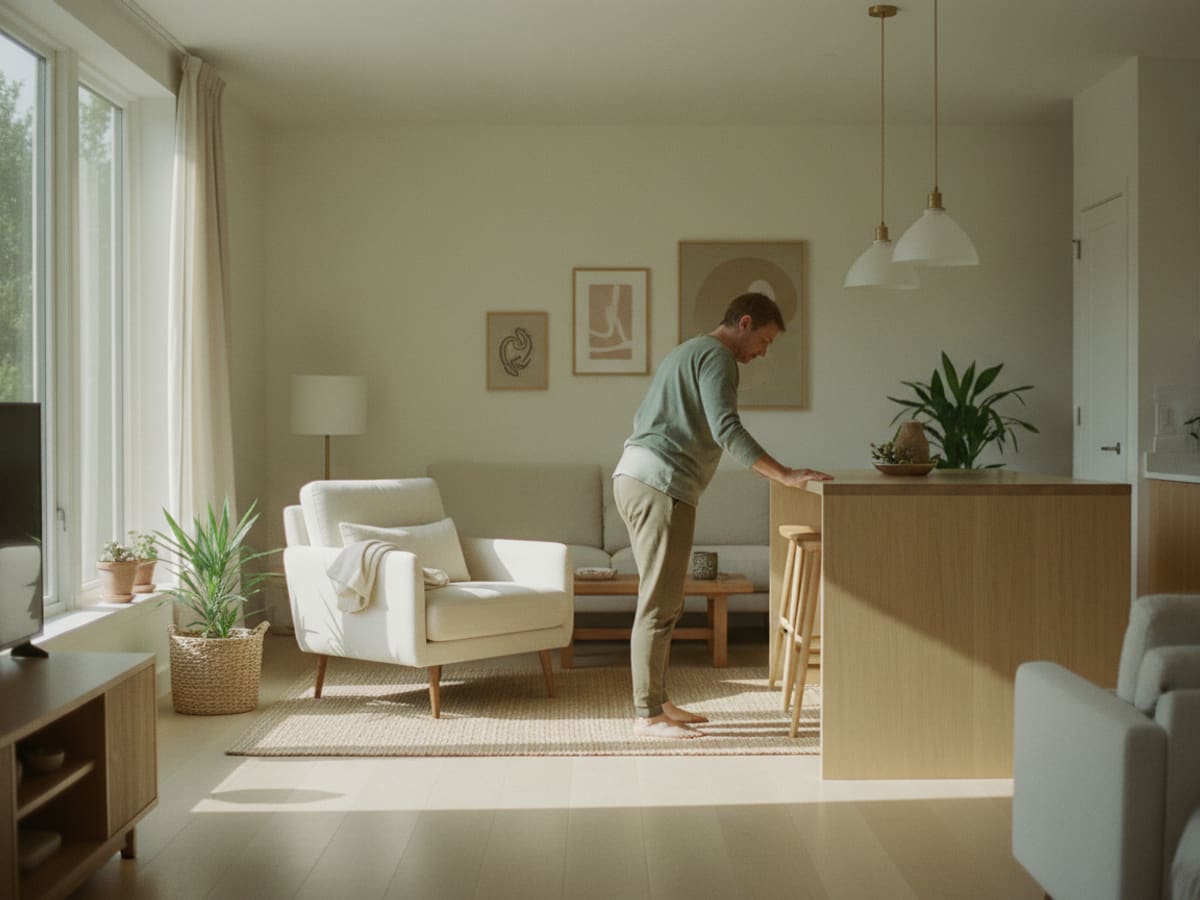
Why everyday strength matters
Most of what we do in a day asks something of our muscles. Standing up from the couch, lifting a laundry basket, reaching for a high shelf, carrying groceries in from the car. None of it feels like exercise, but all of it relies on the same basic strength and balance.
When those muscles get less use, daily tasks can start to feel like more work than they used to. That's common, and it's a normal part of life for many people. The encouraging part is that practicing simple movements can help you feel more steady and capable in the things you already do.
You don't need a gym, special clothes, or equipment. A kitchen counter and a sturdy chair are enough to get started.
Moves that mirror daily tasks
The idea is simple: practice movements that look like your real-life routines. Here are five to try.
- Counter push-ups. Stand facing the counter, place your hands on the edge about shoulder-width apart, and step your feet back a little. Bend your elbows to lower your chest toward the counter, then press back up. This mirrors pushing open a heavy door or getting up from the floor.
- Sit-to-stand. Using a sturdy chair, stand up and sit back down slowly. This is the movement behind getting off the couch, out of the car, or up from the dinner table.
- Hip hinge. Hold the counter, push your hips back as if closing a car door with them, keep your back long, then stand tall again. It's the pattern for picking up a laundry basket or a bag from the floor.
- Heel raises. Hold the counter and slowly rise onto your toes, then lower. This works the calves, which help with walking, climbing stairs, and reaching up high.
- Counter-supported step or leg lift. Holding on, lift one knee or extend one leg out to the side, then switch. It supports the balance you use when stepping over a curb or putting on pants.
Move slowly and steadily. Controlled movement usually teaches your body more than speed does.
Using a counter or chair for support
Support isn't a shortcut. It lets you practice the right movement with confidence, and you can use less of it as you feel steadier.
A countertop works well because it's at a good height and is usually fixed in place. Check that it's clear of dishes and that it doesn't slide or wobble. Stand close enough that you don't have to lean far forward.
For a chair, choose one that's stable, with no wheels, and place it against a wall if you can so it doesn't slide back when you stand up. A firm seat is easier to use than a soft, deep cushion.
Some other practical setup tips:
- Wear shoes with a good grip, or go barefoot on a non-slip surface. Socks on a smooth floor can slip.
- Keep your phone nearby and your path clear of rugs, pets, and clutter.
- Rest a hand lightly on the counter at first. If that feels easy, try using just your fingertips.
Breathing matters too. Try to breathe out as you do the harder part of a move, such as standing up, and in as you return. Holding your breath tends to make effort feel harder.
How often to practice and how to pace yourself
Short, regular sessions are easier to keep up than occasional long ones. Many people find that a few minutes while the coffee brews or dinner heats up fits naturally into the day.
Here is one way to build a simple routine:
- Choose two or three moves from the list above.
- Do each one slowly for a number of repetitions that feels manageable, and stop while you still feel you could do a couple more.
- Rest for as long as you need between moves.
- Practice on a few days each week, giving your body a day in between to recover.
- After a couple of weeks, if it feels comfortable, add a repetition or try a second round.
Mild muscle tiredness is normal. Sharp pain, joint pain, dizziness, or a feeling that something is wrong is a signal to stop. Pushing through those isn't a good plan.
Progress rarely moves in a straight line. Some days will feel easier than others, depending on sleep, stress, and how busy you've been. Going at a gentler pace on a tough day still counts.
When to get guidance from a physical therapist or doctor
Simple moves are suitable for many people, but not everyone. If you have a health condition, are recovering from an injury or surgery, or have been told to limit certain movements, check with your doctor before starting.
A physical therapist can look at how you move, suggest changes that fit your body, and show you how to adjust exercises to your needs. This can be especially useful if daily tasks have become noticeably harder, if you've had a fall or feel unsteady, or if you're not sure where to begin.
Everyday strength is built from small, ordinary efforts. A few mindful minutes at the counter can be a practical way to stay connected to the movements that matter most in your day.